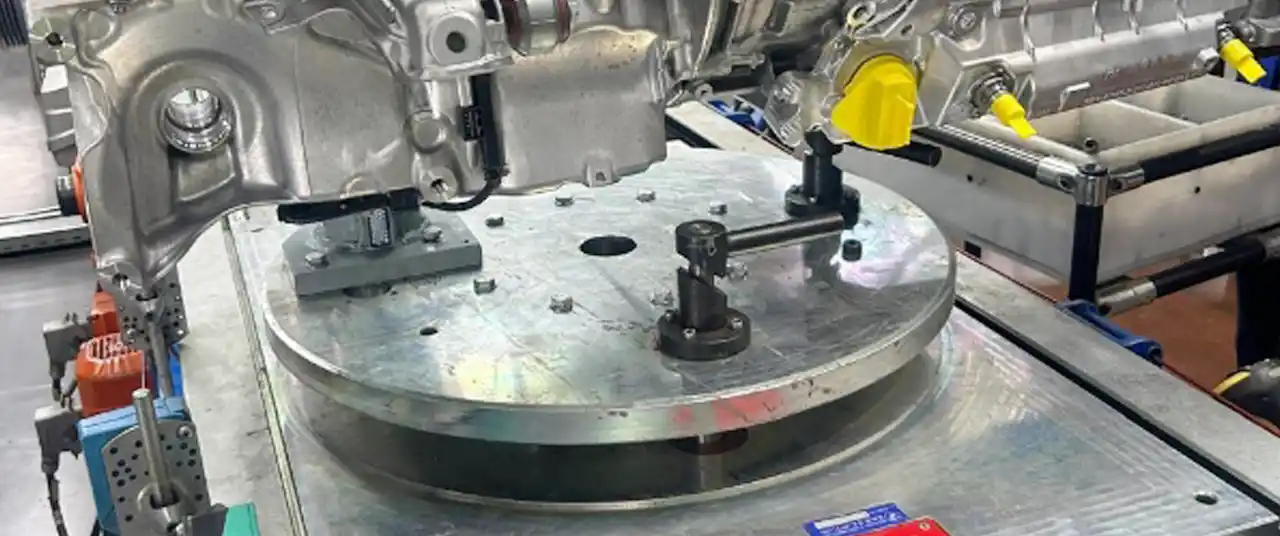

A spur gear slew drive is a type of mechanical device that enables rotational motion, typically for heavy-duty applications. It consists of a slewing ring (slewing bearing) and a gear system that uses spur gears to transmit torque. Spur gears have straight teeth that are aligned parallel to the axis of rotation, providing smooth and efficient power transmission with minimal backlash.
| Model | Output Torque | Tilting Moment Torque | Holding Torque | Gear Ratio | Tracking Precision | Weight | Drawing |
|---|---|---|---|---|---|---|---|
| VE10 | 18 KN.m | 8500 N.m | 75 KN.m | 80:1 | ≤0.3° | 88kg |  |
| VE10 | 13284 lbf.ft | 6273 lbf.ft | 55350 lbf.ft | 80:1 | ≤0.3° | 88kg | |
Key Features of a Spur Gear Slew Drive:
- Spur Gear Mechanism: The spur gear design enables the transfer of power between the driving component (such as a motor) and the slewing ring. The straight-cut teeth of spur gears allow for efficient torque transfer and smooth rotational movement.
- High Torque Output: Spur gear slew drives can deliver significant torque, making them suitable for applications that require the handling of heavy loads.
Applications of Spur Gear Slew Drives:
- Solar Tracking Systems: Used to rotate solar panels to follow the sun’s movement, optimizing energy capture.
- Cranes and Lifting Equipment: Provide smooth and controlled rotation of crane booms, ensuring efficient and safe load handling.
- Wind Turbines: Help rotate the nacelle or adjust the blades to align with wind direction.
Overall, spur gear slew drives are known for their efficiency, reliability, and ability to handle high loads in applications where precise rotational control is required.