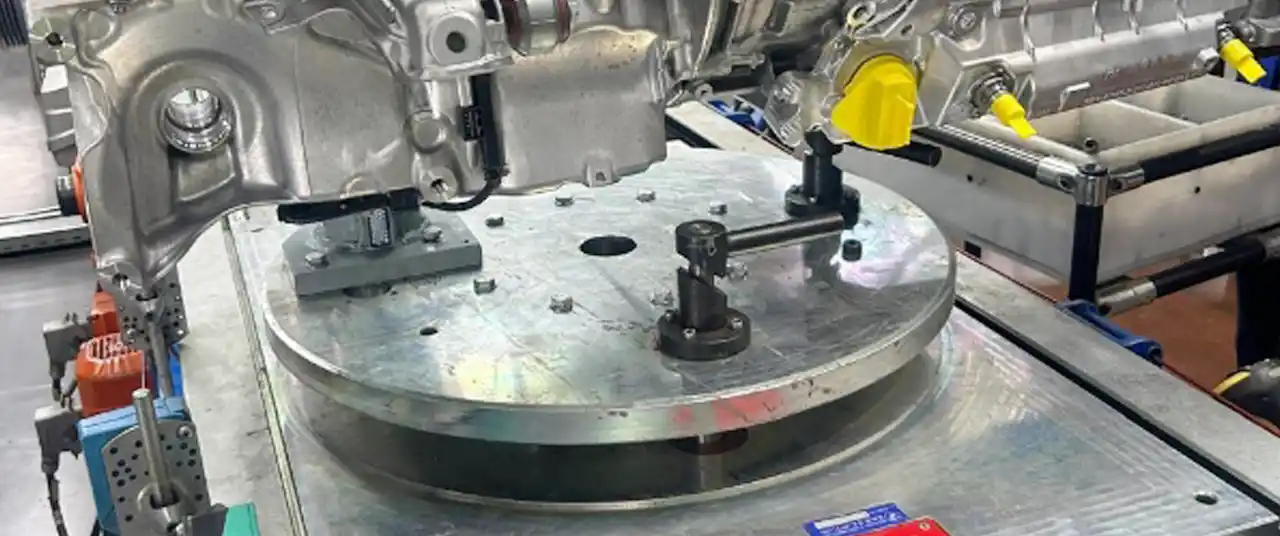

A slewing drive is a type of mechanical drive system designed to provide rotational movement with a high level of torque and precision. It consists of a motor (either hydraulic or electric), a gearbox, and a slewing ring. The slewing ring is a large bearing that allows for smooth rotation, typically in a continuous motion, and can handle both axial and radial loads. Slewing drives are widely used in applications requiring rotation, such as cranes, excavators, solar tracking systems, and wind turbines.
Slewing drives work by converting the input energy (either hydraulic or electric) into rotational movement through a gearbox. This gearbox typically features a reduction ratio, which helps to increase torque output while reducing the rotational speed. The slewing ring bearing ensures that the drive can rotate smoothly, handling both the load and the forces involved in rotation. These drives are often designed to rotate 360 degrees, though some can rotate more or less, depending on the application.
Slewing drives are known for their efficiency, durability, and ability to handle large loads while maintaining high precision. Their design allows them to work in harsh environments, where other types of drive systems might fail, making them ideal for industrial machinery, solar power systems, and construction equipment.