
Introduction: What is a Slewing Bearing?
A slewing bearing, also known as a slewing ring or turntable bearing, is a large, specialized bearing that is designed to support heavy loads and allow rotational movement. Unlike traditional bearings, which handle rotational or linear motion, slewing bearings can carry both axial (vertical), radial (horizontal), and moment loads simultaneously. This unique feature makes them crucial in machinery and equipment where both heavy lifting and rotational movements are required, such as in cranes, excavators, wind turbines, and large construction equipment.
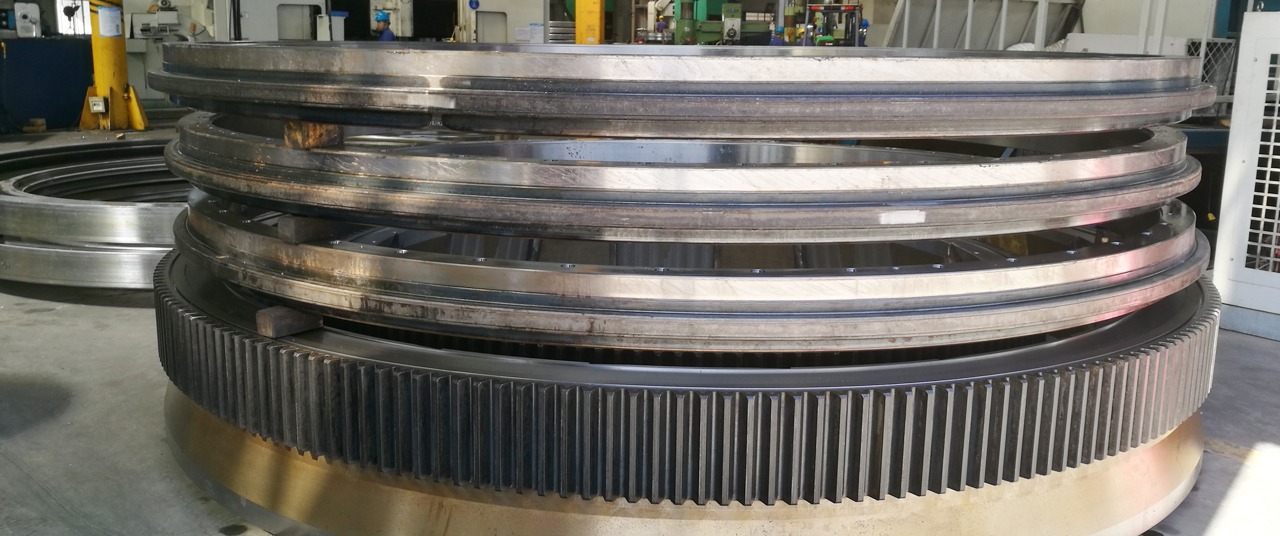
Slewing bearings are essential components in these applications due to their ability to enable smooth rotation while supporting significant weight. As machinery becomes larger, more powerful, and more specialized, the need for such high-performance bearings has grown. They ensure the reliability and safety of equipment that operates under heavy loads and complex motion dynamics.
Key Components of a Slewing Bearing
A slewing bearing typically consists of four main components: the inner ring, outer ring, rolling elements (such as balls or rollers), and raceways. These components are designed to allow for the efficient transfer of both radial and axial loads while enabling smooth rotational motion.
- Inner Ring: This is the central part of the bearing that is usually attached to the rotating part of the machinery. It provides a stable support surface for the rolling elements.
- Outer Ring: The outer ring is typically connected to the stationary part of the equipment. It holds the rolling elements in place and bears the load exerted on the bearing.
- Rolling Elements: These are the balls or cylindrical rollers that move between the inner and outer rings. They facilitate the movement of the bearing and help distribute the loads across the surface area, minimizing friction and wear.
- Raceways: The raceways are the grooves on both the inner and outer rings where the rolling elements travel. The precision of these raceways is crucial for ensuring smooth, efficient movement.
These components work together to allow slewing bearings to rotate while supporting both axial and radial loads. In some cases, additional components like seals and lubrication systems are included to protect the bearing from environmental factors such as dirt, moisture, or contaminants.
Applications and Uses of Slewing Bearings
Slewing bearings are primarily used in applications where large, heavy, and complex machinery needs to rotate or swivel smoothly under load. Some of the most common applications include:
- Cranes and Construction Equipment: Slewing bearings are widely used in cranes, excavators, and other construction machinery where the ability to rotate large booms, jibs, or buckets is required. The bearing supports the weight of the boom and allows for precise movement in various directions.
- Wind Turbines: In wind energy applications, slewing bearings are used in the yaw mechanism, which rotates the wind turbine to face the wind. They ensure that the turbine can adjust to changing wind directions, optimizing energy production.
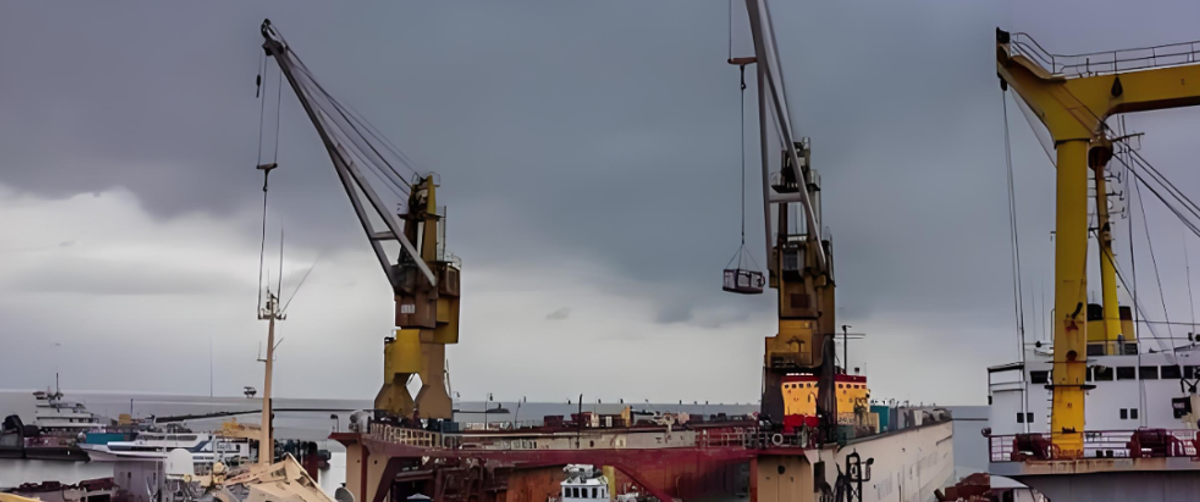
- Marine Industry: Slewing bearings are used in ships and offshore platforms for applications like rotating turrets, cranes, and positioning systems. They are capable of handling high loads in harsh marine environments, which makes them ideal for these industries.
- Solar Tracking Systems: In solar energy applications, slewing bearings are used to enable solar panels to track the sun. This ensures that the panels are always positioned at the optimal angle to collect the maximum amount of sunlight.
- Robotics and Automation: Slewing bearings are also found in various robotic systems, where they enable precise movement and load-bearing capabilities in systems like robotic arms or automated turntables.
Advantages of Slewing Bearings
The unique design of slewing bearings offers several advantages over traditional bearings, making them particularly valuable for specific applications.
- Load Capacity: Slewing bearings are capable of handling large axial and radial loads simultaneously, which makes them ideal for heavy-duty applications where conventional bearings would fail or wear out prematurely.
- Smooth Rotational Movement: Slewing bearings are designed to provide smooth, continuous rotation, even under heavy loads. This is critical in applications such as cranes and wind turbines, where precision and efficiency are essential.
- Versatility: Slewing bearings can be customized to fit a wide range of applications, from smaller machinery to massive industrial machines. Their design allows them to work in diverse environments, from construction sites to offshore platforms.
- Durability: Due to their robust construction and high-quality materials, slewing bearings are extremely durable and capable of withstanding harsh environments, extreme temperatures, and high-press