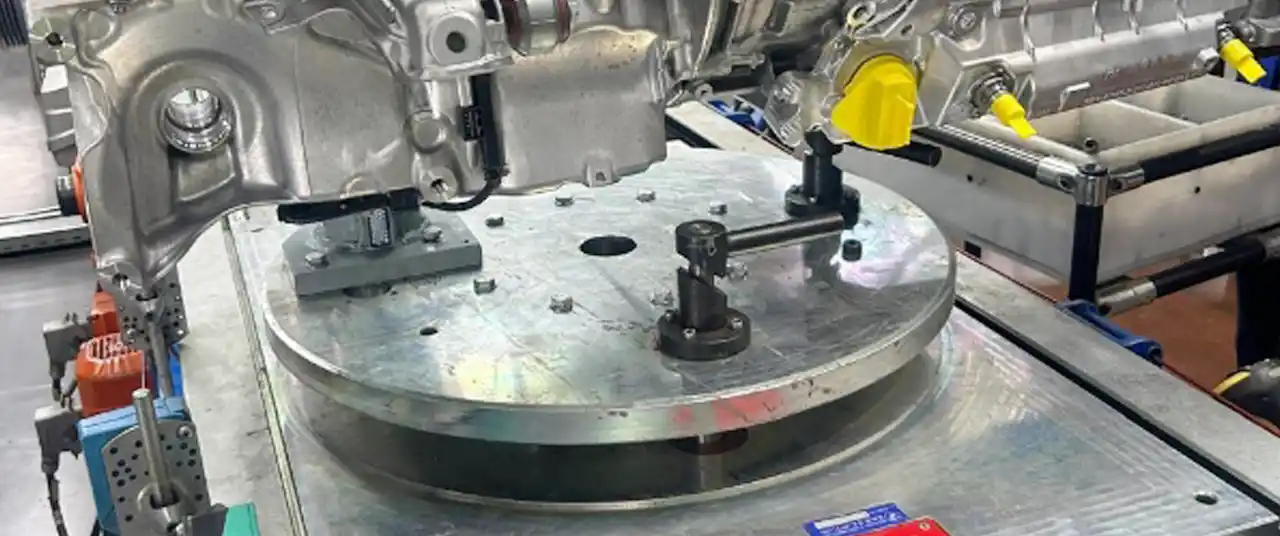

A slew drive, also known as a slewing drive, is a mechanical component that enables controlled and precise rotational movement in machinery. It is commonly used in applications where the controlled rotation of an attached load is essential. The primary purpose of a slew drive is to allow a piece of equipment to rotate around a fixed axis or pivot point.
Here are the key functions and roles of a slew drive:
- Rotation: The main function of a slew drive is to facilitate the rotation of a connected load, such as a platform, arm, or structure. This rotation can occur horizontally or vertically, depending on the design and application requirements.
- Precision and Control: Slew drives are designed to provide precise and controlled rotational motion. This capability is crucial in various industries where accurate positioning or tracking is required, such as in solar trackers, cranes, excavators, and other heavy machinery.
- Load Bearing: Slew drives are often capable of supporting heavy loads while maintaining smooth and controlled rotation. This makes them suitable for applications where both strength and precision are essential.
- Compact Design: Slew drives are known for their compact design, allowing for efficient use of space in various applications. This is particularly important in situations where space is limited or where a compact design is desired.
- Integration with Motors: Slew drives can be integrated with electric or hydraulic motors to provide the necessary power for rotation. This integration allows for a complete and functional system that meets specific operational requirements.
Common applications of slew drives include solar tracking systems, cranes, wind turbines, industrial turntables, and other machinery requiring controlled and precise rotational movement.
In summary, a slew drive plays a crucial role in enabling controlled rotation in machinery, offering precision, strength, and versatility across a range of applications.