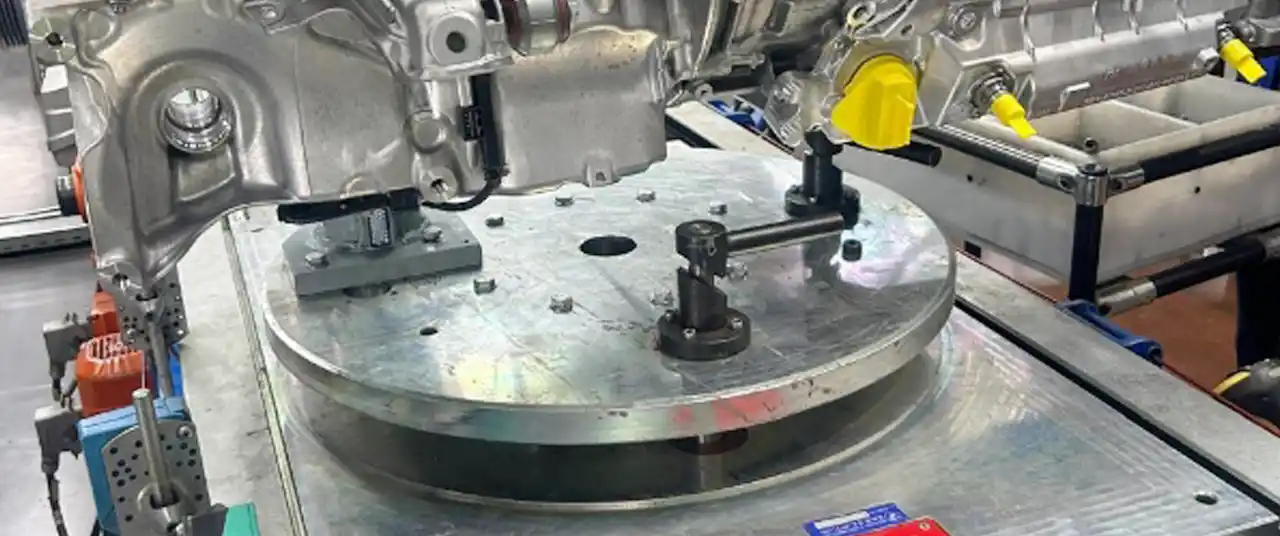

Slew drives are essential mechanical components that integrate rotation, speed reduction, and load-bearing capabilities into a single compact system. They are widely used in solar tracking systems, construction machinery, automation equipment, and various industrial applications. With a combination of worm gears, bearings, and housings, slew drives deliver high torque and stable rotational movement within limited space.
How Does a Slew Drive Work?
A slew drive primarily operates through a worm gear mechanism that facilitates motion control. The worm shaft engages with the worm wheel, converting the rotational movement of the input shaft into high torque output. Due to its high self-locking capability, a slew drive effectively prevents reverse movement caused by external loads. This makes it particularly suitable for applications requiring precise positioning.
Key Features of Slew Drive
- High Load Capacity – Designed to handle axial, radial, and overturning moment loads.
- Compact Design – Integrates multiple mechanical components into a single unit, saving space.
- Precision Control – Ideal for applications requiring accurate rotational positioning.
- Self-Locking Capability – Maintains position without power, ensuring stability and safety.
- Low Maintenance – Requires minimal upkeep compared to traditional gear transmission systems.
Applications of Slew Drive
- Solar Tracking Systems – Enhancing energy absorption efficiency by adjusting the orientation of solar panels.
- Cranes and Lifting Equipment – Providing rotational movement for heavy lifting applications.
- Construction Machinery – Used in excavators, drilling rigs, and concrete pump trucks.
- Industrial Automation – Improving precision in robotic arms and conveyor systems.
- Medical Equipment – Enabling stable rotational control in large medical imaging devices.
Conclusion
Due to its compact structure, high efficiency, and self-locking capability, the slew drive plays a critical role across multiple industries. As smart manufacturing, renewable energy, and automation technologies continue to evolve, the applications of slew drives will expand further, making them an indispensable component in modern industrial advancements.