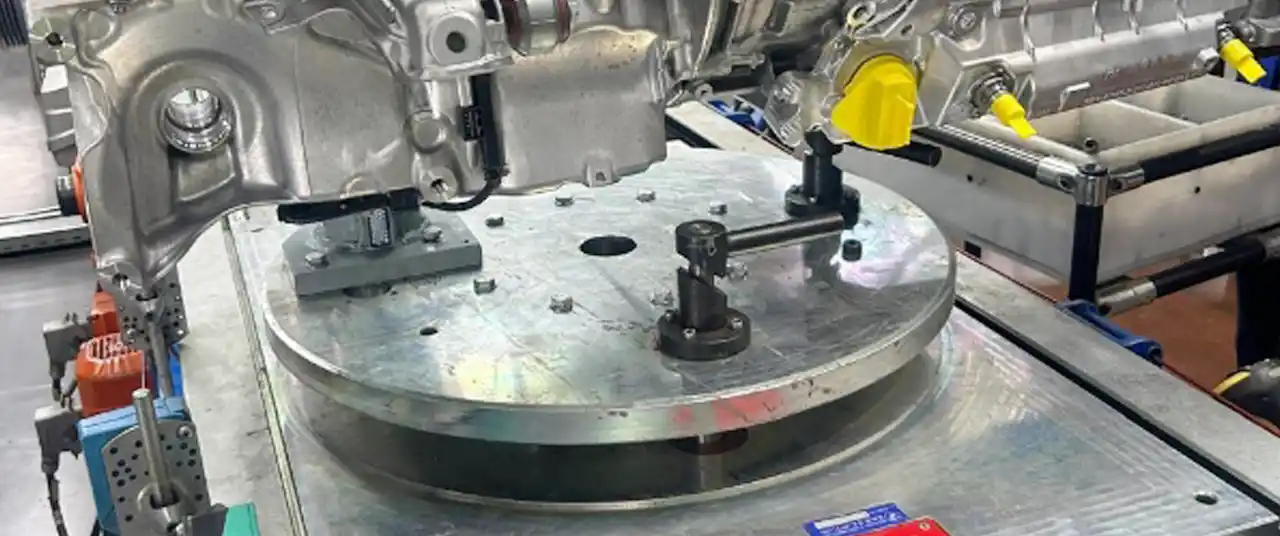

comparison between slewing bearings and precision small bearings across several aspects:
- Design and Structure
- Slewing Bearings: These are large, robust bearings designed to handle axial, radial, and tilting moment loads simultaneously. They typically consist of an inner and outer ring with rolling elements and may include gear teeth.
- Precision Small Bearings: These are compact bearings optimized for high precision and low friction, typically handling radial or axial loads separately. They are smaller and have simpler construction.
- Load Capacity
- Slewing Bearings: Built to handle very heavy loads, they excel in applications involving large axial and radial forces, along with moment loads.
- Precision Small Bearings: These bearings are designed for light to moderate loads, focusing on precision and smooth rotation in smaller mechanisms.
- Performance
- Slewing Bearings: Ideal for slow, heavy-duty rotational movements, offering high stability and durability under extreme conditions.
- Precision Small Bearings: Designed for high-speed, low-friction operation, delivering excellent accuracy and efficiency in small, precise machinery.
- Durability and Maintenance
- Slewing Bearings: More durable for harsh environments but require regular maintenance, including lubrication and inspection.
- Precision Small Bearings: Typically require minimal maintenance and offer a longer lifespan in clean, controlled environments.
- Cost
- Slewing Bearings: Generally expensive due to their size, complex design, and heavy-duty capacity.
- Precision Small Bearings: Much more affordable, due to their smaller size and simpler design, making them cost-effective for precision applications.
- Applications
- Slewing Bearings: Used in heavy industrial applications like cranes, wind turbines, and construction machinery.
- Precision Small Bearings: Common in electronics, medical devices, and high-precision instruments where small size and accuracy are key.
Conclusion
Slewing bearings are best for heavy loads and slow speeds in large machinery, while precision small bearings excel in high-speed, accurate, and low-load applications. The choice depends on load capacity, cost, and application needs, with slewing bearings offering strength and durability at a higher price, and precision small bearings providing cost-effective, smooth performance for smaller, delicate systems.