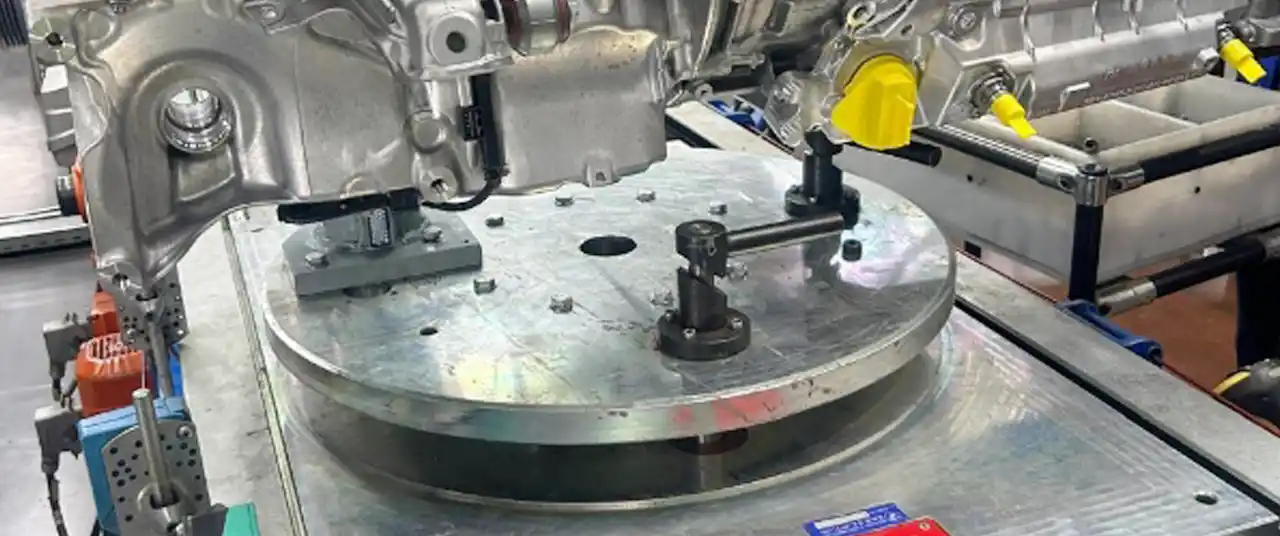

A spur gear slewing drive is a mechanical system that is used to rotate large loads in a controlled manner, typically in applications where heavy rotational movement is needed. The term “slewing” refers to a slow, controlled rotational movement, and the “drive” refers to the system that generates that movement.
Key Components:
- Spur Gear: A spur gear is a type of gear with straight teeth that are parallel to the axis of rotation. In a slewing drive, the spur gear typically meshes with a ring gear to drive the rotation.
- Ring Gear: This is the large gear that receives power from the spur gear and drives the rotational movement.
- Planetary Gear Mechanism: Some slewing drives may use a planetary gear system within the drive, which helps distribute the load more evenly and allows for high torque transmission with compact designs.
- Bearings: Slewing drives often feature large, heavy-duty bearings that support both the weight of the load and the rotational forces.
- Motor: A motor, typically electric or hydraulic, provides the input power to turn the spur gear and drive the system.
Applications:
- Slewing drives are commonly found in heavy-duty applications like:
- Construction equipment (e.g., cranes, excavators)
- Wind turbines (for yaw control)
- Solar tracking systems (to adjust the position of solar panels)
- Material handling and other heavy machinery that requires precise rotational movement.
Advantages:
- High Torque Output: Spur gear slewing drives are capable of transmitting high torque, making them suitable for heavy-duty applications.
- Compact Design: They often have a compact size relative to their torque output, which is beneficial when space is limited.
- Durability: They are built to handle harsh conditions and long operational lifespans.
How It Works:
When power is supplied to the motor, it rotates the spur gear. This gear meshes with the ring gear, causing the load connected to the ring gear to rotate slowly and smoothly. The planetary gear mechanism (if included) helps distribute the force evenly, which is important for large loads that need to be rotated.
Is there a specific application you’re thinking about for a spur gear slewing drive, or are you exploring different types of slewing drives in general?