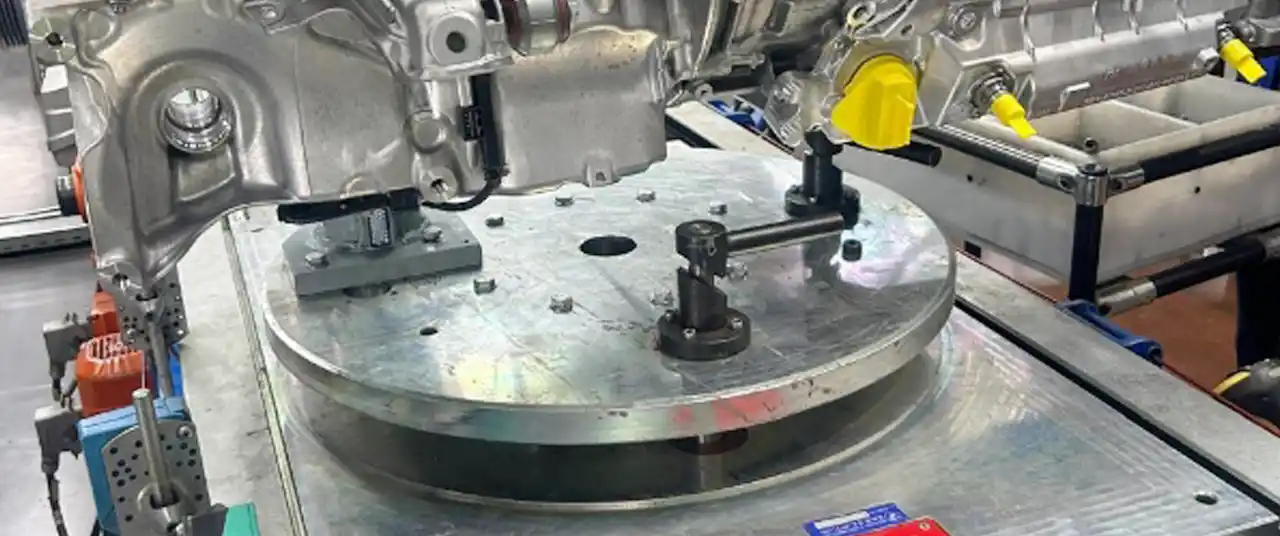

slewing bearing without teeth, also known as toothless slewing bearings or smooth slewing bearings, are a bearing type that lacks gear teeth on the outer ring. It typically requires an external drive mechanism such as a pinion, hydraulic motor, or other drive system to transmit rotational motion, rather than relying on external gear teeth to induce rotation.
Here are some key points about gearless slewing bearings:
Design: These bearings have a smooth outer ring and no gear teeth, which makes their design simpler and more compact than slewing rings with external gears. They consist of an inner ring, an outer ring, rolling elements such as balls or rollers, and often contain seals and lubrication grooves.
Application: Slewing bearing without teeth are typically used in systems that have integrated external gear mechanisms or where design constraints require a toothless design. They are widely used in various industries such as construction, robotics, medical equipment and industrial automation.
Drive System: Due to the lack of gear teeth, gearless slewing rings rely on an external drive system for rotation. This can include gearboxes, hydraulic motors, electric motors or other mechanisms, depending on the specific requirements of the application.
Advantages: Slewing bearing without teeth offer several advantages, including simplicity of design, light weight, and potentially lower cost than their geared counterparts. They also provide more flexibility when selecting a drive system.
Considerations: When selecting a slewing bearing without teeth, factors such as load capacity, rotational speed, environmental conditions, and compatibility with the selected drive system need to be carefully considered to ensure optimal performance and longevity.
In general, slewing bearing without teeth play an important role in various machinery and equipment requiring rotational motion, providing diverse solutions to different engineering challenges.