
A slew drive is a key component in solar tracking systems, enabling precise movement and positioning of solar panels to maximize energy capture from the sun. Here’s an overview of how slew drives function within solar trackers and their benefits:
What is a Slew Drive?
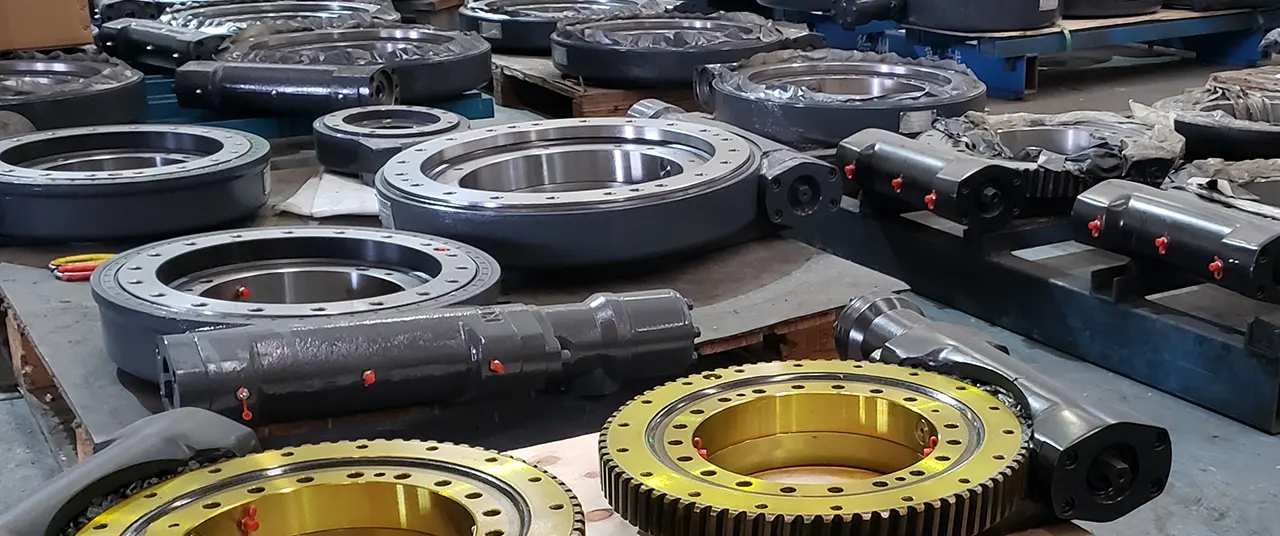
A slew drive is a gearbox that transmits radial and axial loads while providing rotational torque. It typically consists of a slewing ring, worm gear, housing, and a motor. The worm gear meshes with the teeth on the slewing ring, allowing for smooth and controlled rotational movement.
Types of Solar Trackers
Single-Axis Trackers: These trackers rotate around one axis, typically aligning the solar panels east to west to follow the sun’s path across the sky.
Dual-Axis Trackers: These trackers adjust in two planes, allowing the panels to follow the sun’s trajectory both daily and seasonally. This maximizes energy capture throughout the year.
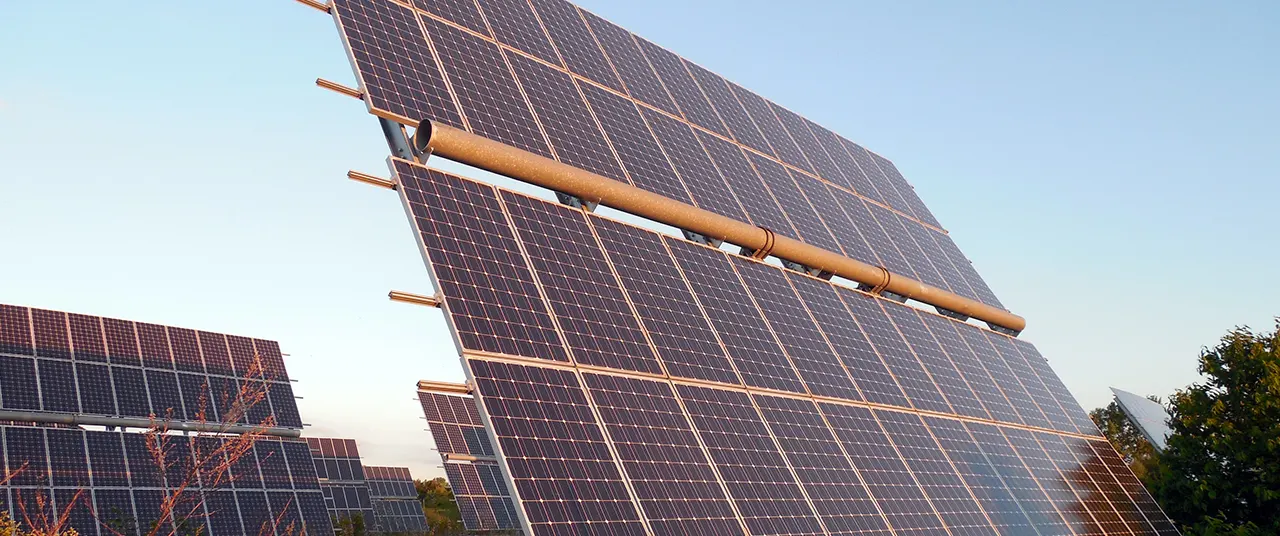
Benefits of Using Slew Drives in Solar Trackers
- Increased Efficiency: By optimizing the angle of the solar panels relative to the sun, slew drives can significantly increase the energy output of solar installations.
- Durability: Slew drives are designed to handle high loads and harsh environmental conditions, making them ideal for outdoor solar applications.
- Precision: The mechanical design of slew drives allows for precise positioning, ensuring that the solar panels are always at the optimal angle.
- Low Maintenance: Slew drives require minimal maintenance, reducing the operational costs over the lifetime of the solar tracking system.
| Model | Output Torque | Tilting Moment Torque | Holding Torque | Gear Ratio | Tracking Precision | Weight | Drawing |
|---|---|---|---|---|---|---|---|
| SE17 | 10 KN.m | 135.6 KN.m | 72.3 KN.m | 102:1 | 0.15° | 105kg |  |
| SE17 | 7400 lbf.ft | 100×10³ lbf.ft | 53×10³ lbf.ft | 102:1 | 0.15° | 105kg | |
Components of a Slew Drive
- Slewing Ring: The core component that provides the rotational movement.
- Worm Gear: Engages with the slewing ring to facilitate motion.
- Housing: Protects the internal components and provides structural support.
- Motor: Drives the worm gear, which in turn rotates the slewing ring.
- Seal: Ensures that the internal components are protected from dust, water, and other contaminants.
Applications in Solar Trackers
- Residential Solar Systems: Small-scale installations for homes, improving energy yield and reducing electricity bills.
- Commercial Solar Farms: Large-scale solar farms use slew drives to maximize energy production and improve return on investment.
- Off-Grid Solar Systems: Essential for remote locations where optimizing energy capture is critical for system reliability.
Selection Criteria for Slew Drives in Solar Trackers
- Load Capacity: Ensuring the drive can handle the weight of the solar panels and withstand wind and other environmental forces.
- Torque Requirements: Adequate torque to move and hold the panels in position.
- Speed: Appropriate speed to track the sun’s movement without excessive energy consumption.
- Environmental Resistance: Ability to withstand outdoor conditions, including temperature variations, moisture, and dust.
Conclusion
Slew drives play a critical role in the efficiency and reliability of solar tracking systems. By selecting the appropriate slew drive and ensuring it is properly integrated into the solar tracker, the overall performance and energy yield of solar installations can be significantly enhanced.