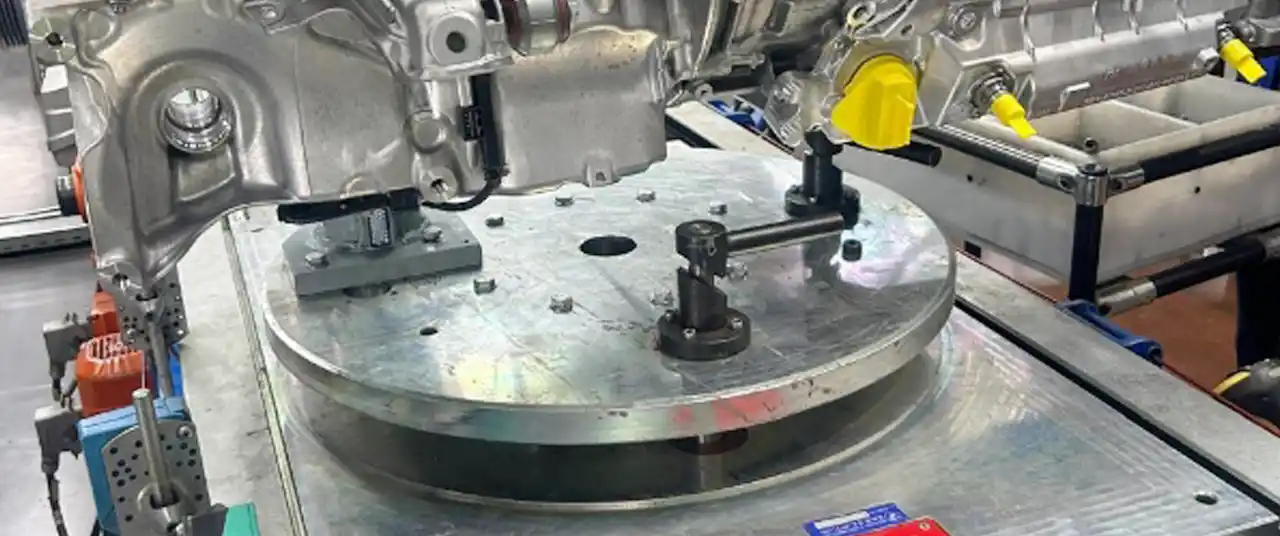

In the world of precision engineering and heavy machinery, selecting the right component is crucial. A common dilemma for engineers and procurement managers is understanding the specific difference between a ball bearing and a slewing bearing.
While both are designed to facilitate rotation and reduce friction, they are built for vastly different worlds. One is a master of high-speed efficiency, while the other is a giant capable of handling massive heavy-duty loads.
This guide breaks down their structural differences, load capacities, and ideal applications to help you make the right choice.
What is a Ball Bearing?
A ball bearing is the most common type of rolling-element bearing. It uses spherical balls to separate the bearing races, drastically reducing rotational friction.
-
Design: Typically consists of an inner ring, an outer ring, a cage, and ball elements.
-
Key Feature: Point contact. The balls make contact with the raceway at a single point.
-
Best For: Applications requiring high rotational speed and low friction, such as electric motors, pumps, and automotive wheels.
What is a Slewing Bearing?
A slewing bearing (often called a slewing ring or turntable bearing) is a specialized bearing designed to support heavy axial loads, radial loads, and—most importantly—tilting moment loads simultaneously.
-
Design: Often features mounting holes, internal or external gears, and sealing systems integrated directly into the rings.
-
Key Feature: Large diameter and robust structure specifically for slow, oscillating movements.
-
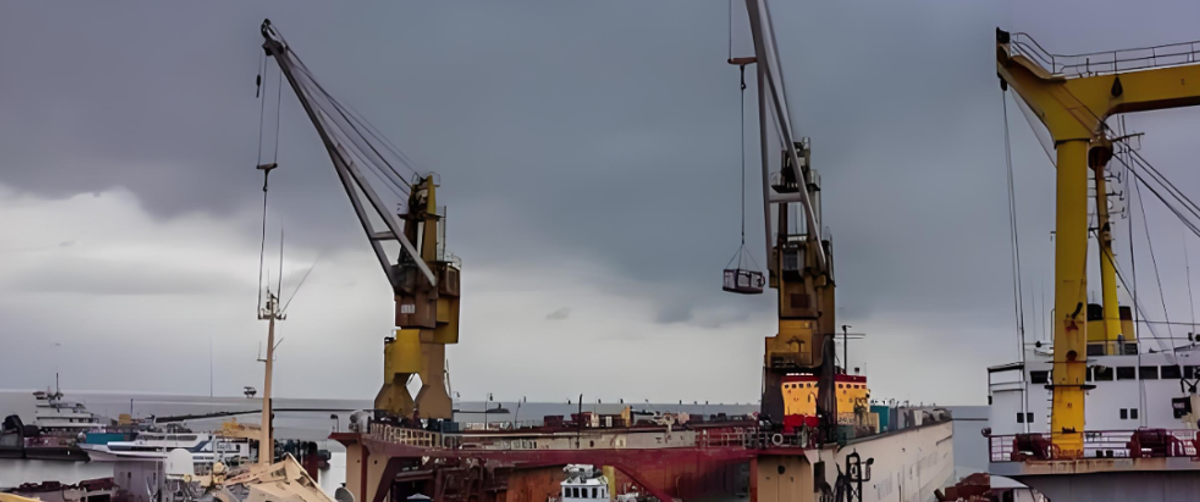
Best For: Heavy equipment like excavators, cranes, and wind turbines where the structure must rotate 360 degrees while carrying a heavy load.
The 4 Core Differences: Ball Bearing vs. Slewing Ring
To understand which one you need, we must compare them across four critical engineering dimensions:
1. Load Capacity and Type
This is the biggest differentiator.
-
Ball Bearings: Due to their point-contact design, standard deep groove ball bearings are excellent for radial loads (perpendicular to the shaft) but have limited capacity for heavy axial loads or moment loads.
-
Slewing Bearings: These are designed to handle complex loads. They excel at managing tilting moment loads (the force that tries to flip the bearing over). If you are building a crane that lifts a heavy weight at a distance, you need a slewing bearing to counteract that leverage.
2. Rotational Speed (RPM)
-
Ball Bearings: Built for speed. They generate very little heat and can operate at thousands of RPM (Revolutions Per Minute).
-
Slewing Bearings: Built for stability. They typically operate at low speeds (often less than 10 RPM) or in intermittent oscillating motions.
3. Structure and Integration
-
Ball Bearings: Usually compact and standardized components mounted onto a shaft and inside a housing.
-
Slewing Bearings: They are structural components themselves. They are often large (0.4m to 10m in diameter) and mount directly to the machine frame via bolts. Many come with integrated gear teeth, allowing them to be driven directly by a pinion.
4. Size and Scale
-
Ball Bearings: Range from miniature (a few millimeters) to medium sizes.
-
Slewing Bearings: Start where ball bearings usually end. They are the “giants” of the bearing world.
Comparison Table: At a Glance
Note: This table is optimized for Google Snippets.
| Feature | Standard Ball Bearing | Slewing Bearing (Slewing Ring) |
| Primary Load | Radial Load | Axial, Radial & Tilting Moment |
| Contact Type | Point Contact | Line or Point (depending on roller/ball type) |
| Speed (RPM) | High Speed | Low Speed / Oscillating |
| Mounting | On Shaft / In Housing | Bolted directly to surface (Flanges) |
| Gears | No | Often Integrated (Internal/External) |
| Typical Use | Motors, Fans, Conveyors | Excavators, Cranes, Radar Systems |
FAQ: Common Questions about Bearing Selection
Q: Can a slewing bearing replace a ball bearing? A: Generally, no. Slewing bearings are too large and designed for slow speeds. They cannot handle the high RPMs that standard ball bearings are designed for.
Q: Why are slewing bearings used in cranes? A: Cranes generate a massive tilting moment (tipping force). Slewing bearings are uniquely designed to hold the crane stable against this force while allowing 360-degree rotation.
Q: What is the price difference? A: Slewing bearings are significantly more expensive due to their custom manufacturing, large size, and integrated features like gearing and mounting holes.
Conclusion
Choosing between a ball bearing and a slewing bearing ultimately comes down to your application’s specific needs regarding load and speed.
-
Choose a Ball Bearing for compact, high-speed, low-load applications.
-
Choose a Slewing Bearing for heavy, slow-moving machinery that requires support for tilting moments and structural integration.
Understanding these differences ensures your machinery runs efficiently and safely.