
1. Raw Material Blanks and Labor Cost
This factor typically accounts for more than 40% of the total cost of a standard slewing bearing design.
2. Structural Type and Rolling Element Design
This is the fundamental factor determining both the load capacity and the price of a slewing bearing.
The more complex the structure, the higher the processing complexity and material cost.
- Single-row ball type
The most common and economical option, suitable for most standard operating conditions.
Simple structure, lowest cost, and widely used. - Crossed roller type
Rollers replace steel balls, providing a larger contact area. This significantly improves accuracy and overturning resistance, making it suitable for machine tools, robots, and other high-rigidity applications.
The price is typically 5–10% higher than single-row ball types. - Three-row roller type
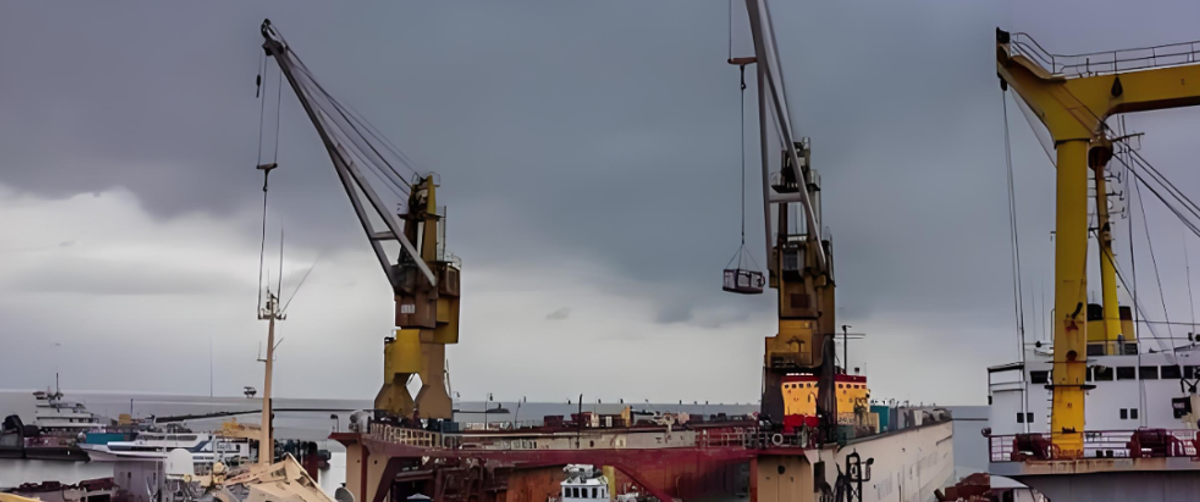
Designed for heavy-duty equipment such as large excavators and port cranes.
Axial and radial raceways are separated, providing the highest load capacity.
Due to the large number of components and complex processing, this type has the highest cost.
Cage materials (mainly for three-row roller bearings)
Nylon cage: Most common, self-lubricating, cost-effective. Segmented nylon cages are significantly more expensive.
Aluminum cage: Lightweight design for weight-sensitive precision equipment.
Steel/bronze cage: Highest strength, used for heavy load and high-impact conditions, with the highest cost.
3. Raw Materials and Heat Treatment — The Core of Service Life
This is the most invisible cost factor, but it determines how long the bearing can operate under extreme conditions.
Steel grade differences
Standard medium-carbon steel 50Mn meets basic requirements.
High-performance alloy steel 42CrMo offers better hardenability and superior low-temperature impact toughness, making it ideal for heavy machinery or cold regions.
Material cost alone differs by about 15%. For slewing bearings with diameters over 2 meters, 42CrMo is recommended for enhanced impact performance.
Heat treatment process
Raceway hardening
Deep induction hardening with a case depth ≥ 3.5 mm is critical for resistance to pitting and wear.
Achieving uniform hardness requires high-energy professional equipment.
Gear hardening
For geared bearings, whether the gear teeth are hardened is critical for wear resistance.
Gear hardening increases machining cost by 5–10%, but is essential for applications with frequent meshing.
4. Gear Machining — The Precision Art of Power Transmission
For geared slewing bearings, gear processing is a key part of the cost structure.
External gear vs. internal gear
External gears are easier to machine. Internal gears are structurally restricted and significantly more difficult and costly.
For internal diameters below 200 mm, internal gear machining becomes extremely difficult. If hardening is also required, the difficulty increases several times.
Accuracy level (cutting vs. grinding)
Milling / shaping / hobbing: Standard accuracy with controlled cost
Gear grinding: When accuracy reaches DIN 6 or ISO 6 or higher, precision grinding with expensive forming grinders is required
Gear grinding increases gear machining cost by 20–50%, but provides:
- Lower noise
- Smoother operation
- Longer service life
It is typically used for precision rotary tables or high-speed applications.
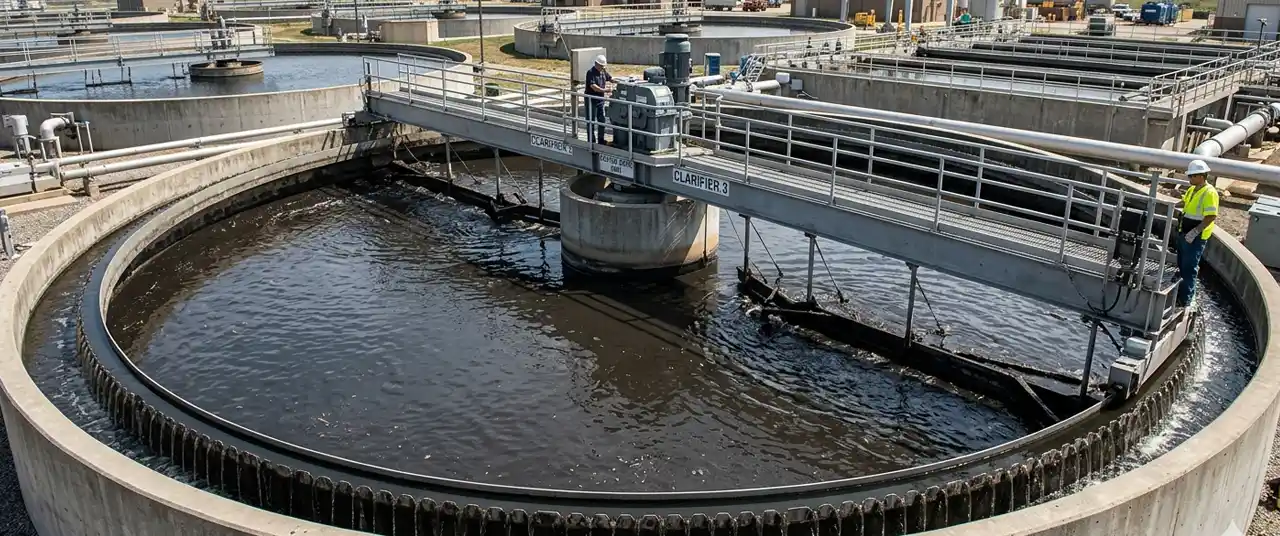
In construction machinery, port equipment, and wastewater treatment, gear grinding is generally not required.
5. Size, Tolerance, and Precision Machining
Larger sizes significantly increase machining difficulty and cost. Precision requirements directly affect production yield.
Diameter effect
Each additional meter in diameter increases the requirements for machine span and stability, resulting in higher cost.
Precision level
Standard construction machinery may allow runout tolerance around 0.2 mm.
For medical equipment, radar, or precision rotary tables, axial/radial runout must be controlled within 0.01 mm or even with negative clearance, requiring additional precision grinding.
Mounting surface grinding
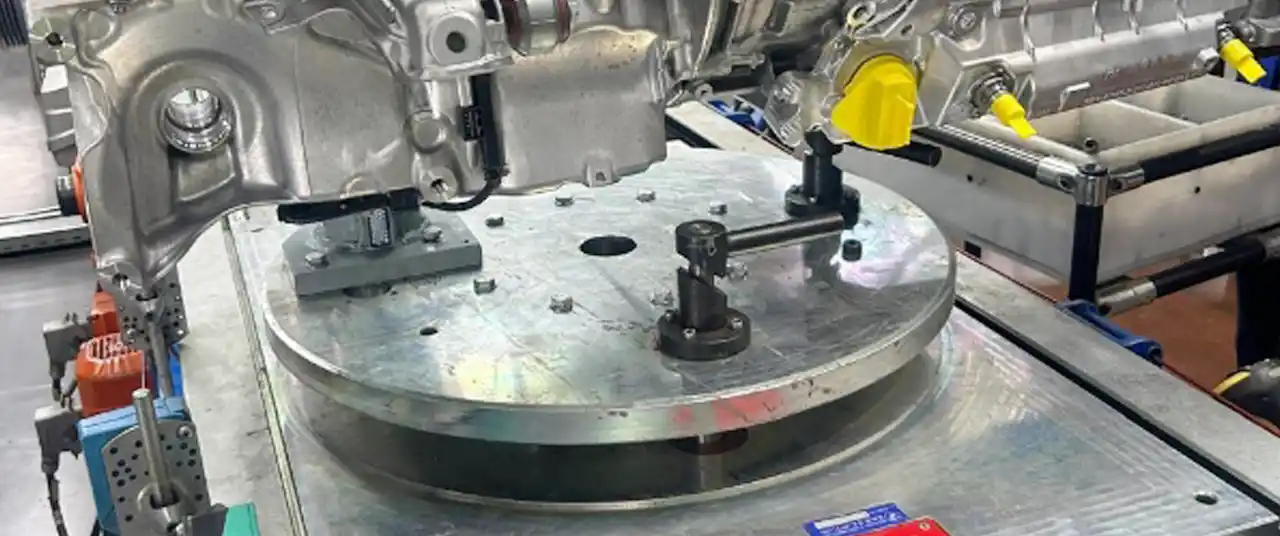
Grinding the upper and lower mounting surfaces greatly improves flatness, ensuring rotation accuracy and uniform load distribution.
This process increases cost by 5–10%.
Wire-cut positioning profile
For bearings with special hole patterns or positioning grooves, high-precision wire cutting provides much higher accuracy than drilling, but at increased cost.
Such requirements have been seen in high-speed rail and railway buffer applications.
6. Surface Treatment and Special Environmental Customization — Protection for Harsh Conditions
These details, often specified in drawings, determine the product’s environmental adaptability and added value.
Anti-corrosion coating
Standard painting: Indoor dry environments
Zinc spraying / hot-dip galvanizing: Medium protection
Marine-grade coating (Sa 2.5 blasting + C5-M standard): Designed for offshore platforms and marine applications
Coating cost differences alone may reach 10% or more.
Sealing system
Seal material
NBR (nitrile rubber): Standard applications
FKM (fluoroelastomer): Required for high temperature, high humidity (e.g., Indonesia), or chemical resistance
FKM material cost is several times higher than NBR.
Seal structure
Multi-lip or dust-lip designs may be required for harsh environments.
Special lubrication
Standard grease
High-temperature (>150°C) or low-temperature (<–40°C) grease
Special grease may cost 5–10 times more than standard grease.
Special surface treatment
Copper plating
Applied to specific areas (such as seal grooves) to improve sealing contact, prevent fretting corrosion, or meet conductivity requirements.
This is a refined surface treatment with significant cost impact.
| Key Parameter | Baseline (Low Budget) | High-End (Premium/High Performance) | Cost Impact (Estimated) | Remarks | |
|---|---|---|---|---|---|
| Material | 50Mn (Carbon Steel) | 42CrMo (Alloy Steel) | +15% ~ +20% | 42CrMo offers higher strength and toughness | |
| Rolling Elements | Steel Ball + Nylon Cage | Roller + Steel/Alu Cage | +25% ~ +40% | Rollers provide much higher load capacity | |
| Gearing Process | Milled Teeth | Ground Teeth + Hardened | +20% ~ +50% | Ground teeth are quieter and more durable | |
| Precision Machining | Standard Tolerance | Lapped Surface + Wire-cut Profile | +10% ~ +15% | Improves fit-up accuracy and equipment life | |
| Sealing System | NBR (Nitrile Rubber) | FKM (Viton/Fluororubber) | Significant increase | FKM is superior for heat & chemical resistance | |
| Surface Coating | Standard Industrial Paint | Marine Grade C5-M Coating | +10% ~ +15% | Essential for salt spray/offshore environments | |
| Lubrication | Standard Lithium Grease | Specialized High/Low Temp Grease | Significant increase | Affects startup torque in extreme climates |